×
×
×
×
Edition : 1 | Volume : 1
Publishing Year : 2025
Langage : English
Publisher : South India Book Traders
Author/s :
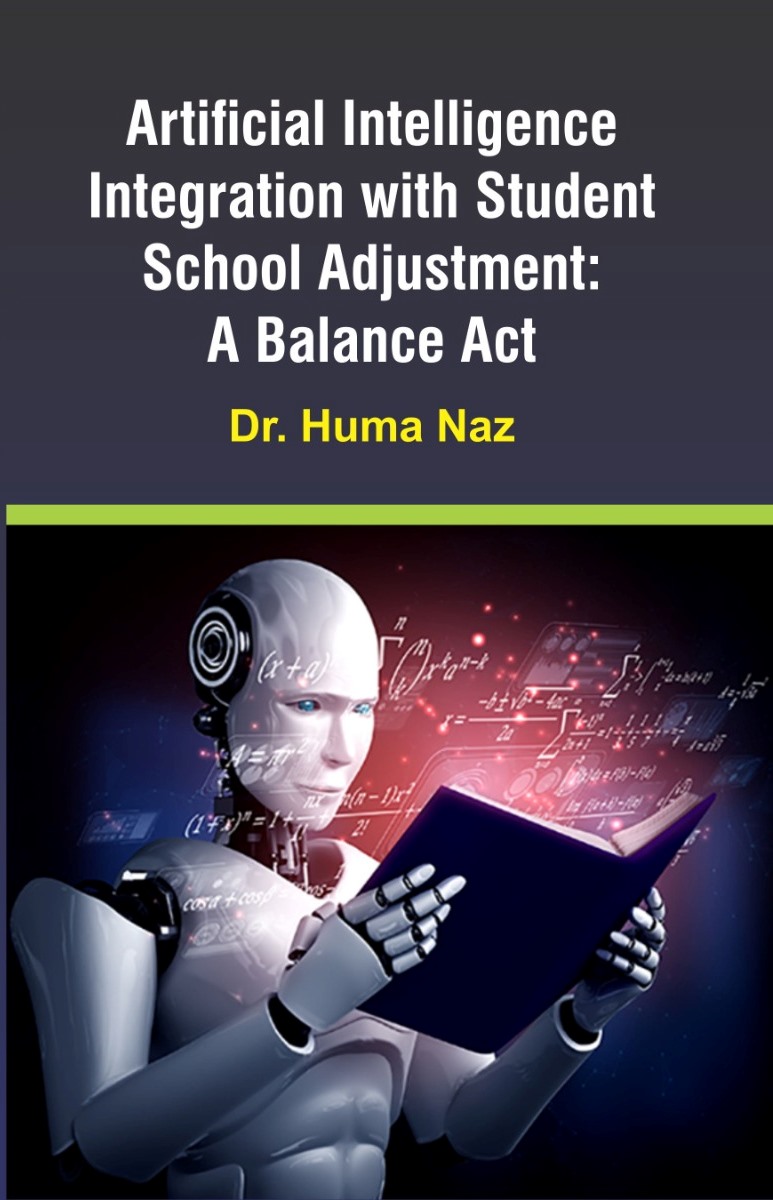
Dr. Huma Naz
Availability :






Students studied in exclusive ways. Some decide on facts, facts and experiments whereas others option for ideas and theories. Artificial Intelligence methods are seemed as precious gear, as they have the potential to broaden and mirror the choice-making process adopted through human beings. There are numerous Artificial Intelligence techniques that have been utilized in adaptive academic structures. Here, Artificial Intelligence based totally device is advanced that takes into consideration a couple of learning style models and multiple Artificial Intelligence techniques for determining college students’ mastering styles. This machine may be deployed each in e-mastering and conventional academic environments to impart adaptive education. The present study focused on the use of Artificial Intelligence of Secondary School Students in relation to School Adjustment.
Dr. Huma Naz

Dr. Huma Naz currently working as an Assistant Professor in Department of Education Integral University, Lucknow is a professional trained educationist and holds the degree of M.Sc. (Industrial Chemistry), M.Ed. and Ph. D (Education) from Integral University, Lucknow. She has nine years of teaching experience and six year of research experience. Her area of expert is Educational Technology and Research in Education. She did her research work on Artificial Intelligence in Education. Dr. Huma Naz has published numerous articles and research papers in reputed national and international journals. She has published eight chapters in edited book. She has attended more than 15 National and International conferences and workshops.
Table of Contents..
Contents
1. Introduction 11
1. Intelligence 13
2. Artificial Intelligence 14
3. Adjustment 16
4. School Adjustment 17
5. Need and Significance of the Study 19
6. Statement of the Problem 20
7. Operational Definitions 20
A. Artificial Intelligence 20
B. School Adjustment 20
C. Secondary School Students 20
8. Objectives of the Study 20
9. Hypotheses of the Study 21
10. Delimitations 22
2. Conceptual Framework of Related Research
Studies 23
1. Review of related literature on Artificial Intelligence 24
2. Review of related literature of School Adjustment 27
3. Research Design 31
1. Descriptive Research 31
2. Variable 31
A. Independent Variables 32
B. Dependent Variables 32
viii Artificial Intelligence Integration
3. Population 32
4. Sample and Sampling Techniques 32
A. Purposive Sampling 33
B. Distribution of the Sample 33
5. Tools used in the study 35
6. Construction of tools 36
7. Artificial Intelligence Scale 36
A. Recognition of the Steps 36
B. Dimensions of the tool 36
C. Collection of opinion of the Experts 36
D. Try outs of the Tool for Item Analysis 37
E. Item Analysis 37
F. Description of the Final Tool 37
8. Artificial Intelligence Scale 38
A. Positive items 38
B. Negative items 38
C. Reliability of the Tool 38
D. Validity of the Tool 39
9. Detailed Description of Final Draft 39
A. Dimensions of Artificial Intelligence Scale 39
B. Description of Items 39
10. School Adjustment Scale 40
A. Try outs of the Tool for Item Analysis 41
B. Second try out of the tool 41
C. Item Analysis 41
D. Description of the Final Tool 42
E. Reliability of the Tool 43
11. Detailed Description of Final Draft 43
A. Dimensions of School Adjustment Scale 43
B. Description of Items 43
12. Statistical Techniques Used 44
A. Mean 44
B. Standard deviation (σ) 44
C. t - test 45
D. Degree of Freedom 45
E. Analysis of Variance (ANOVA) 45
Contents ix
F. The F-test 45
4. Data Analysis 46
1. Objective 1 46
2. Objective 2 47
3. Hypotheses Testing 48
4. Objective 3 48
A. Hypothesis-3 48
5. Objective 4 52
A. Hypothesis-4 52
6. Objective 5 56
A. Hypothesis-5 56
7. Objective 6 57
A. Hypothesis-6 57
8. Objective 7 58
A. Hypothesis-7 58
9. Objective 8 59
A. Hypothesis-8 59
10. Objective 9 60
A. Hypothesis-9 60
5. Findings and Discussions of the study 61
1. Main Findings of the study 61
2. First objective 61
3. Second Objective 62
4. Third Objective 62
A. Hypothesis 3 62
B. Hypothesis 4 62
C. Hypothesis 5 63
D. Hypothesis 6 63
E. Hypothesis 7 63
5. Fourth Objective 64
A. Hypothesis 8 64
B. Hypothesis 9 64
C. Hypothesis 10 64
D. Hypothesis 11 64
x Artificial Intelligence Integration
E. Hypothesis 12 65
6. Fifth objective 65
A. Hypothesis 13 65
7. Sixth objective 66
A. Hypothesis 14 66
8. Seventh objective 66
A. Hypothesis 15 66
9. Eighth objective 66
A. Hypothesis 16 66
10. Ninth objective 67
A. Hypothesis 17 67
11. Educational Implications 67
A. Implications for Students 67
B. Implications for Teachers 68
C. Implications for Schools 68
D. Implications for Parents 69
12. Conclusions 69
13. Suggestions for Further Studies 70
6. References 71