×
×
×
×
NEW
Edition : 1 | Volume : 1
Publishing Year : 2026
Langage : English
Publisher : South India Book Traders
Author/s :
Dr. N. Malini , Dr. K. Anandhi , Dr. S. Hari Ramakrishnan
Availability :
Hard Bond
ISBN: 9789349317956
Publishing Year: 2026
Paper Back
ISBN: 9789349317994
Publishing Year: 2026

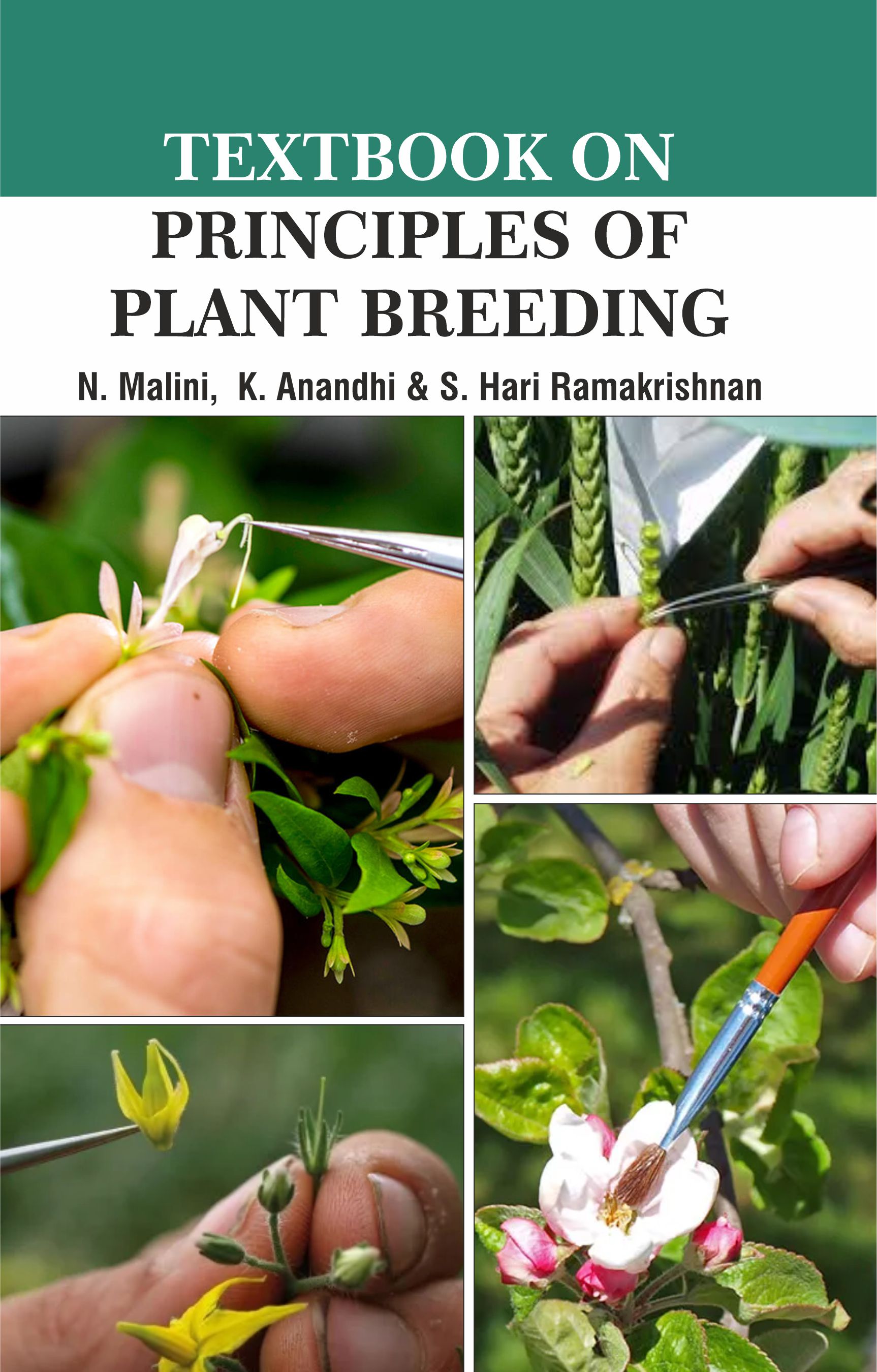
Human being is almost dependent on plants
for his food and all other needs. Plants are major source directly or
indirectly of most food, fodder clothing, fuel, drugs etc. Considering the
prime importance of plants, human being have long been concerned with
developing plant types better suited to satisfying their needs.
Art: Before the rediscovery of Mendelism plant breeding was the result of
visual selection of material practiced on a trial and error basis by untrained
people. Skill and proper judgment coupled with common sense formed the basis of
success. Selection was the only practice of plant breeding which resulted in
development of many varieties developed before 20thcentury. This art depends on
breeder to assess the difference of economic values between the plants.
Now with the growth of genetics,
these practices are systematic to the point, where they can be called as a
science.
Definition: Smith defined plant breeding as the art and science of improving
the genetic pattern of plants in relation to their economic use. It is a
science which uses the knowledge and techniques from many basic science areas.
As a continuation of natural evolution plant breeding is an ancient discipline.
Dr. K. Anandhi

Dr. K. Anandhi is now working as Assistant Professor (PBG) in Tamil Nadu Agricultural University had obtained JNMF scholarship for PhD work on virus resistance breeding using interspecific cross between Capsicum annuum and Capsicum frutescens against Chilli leaf curl virus. One of my research projects, focused on utilization of SSR markers for development of salt tolerant rice using somoclonal variation and mutation breeding. I have guided student in soybean research. During my career, I had focused on development of drought tolerant homozygous lines in rainfed greengram and sorghum by crossing the high yielding varieties with drought tolerant cultivars and studied divergence in cluster bean genotypes. The results of the research work have been published as articles (30 Nos.) in peer-reviewed journals.
Table of Contents..
1. Objective and Role of Plant Breeding
2. Centres of Origin
3. Plant Genetic Resources
4. Germplasm
5. Modes of Reproduction
6. Self Incompatibility
7. Sterility
8. TGMs, PGMs, Gametocides, Transgenic Male Sterility and Applications
9. Apomixis
10. Basic Biometrics
11. Plant Introduction as a Breeding Method
12. Genetic Basis of Self Pollinated Crops
13. Breeding Methods for Self-Pollinated Crops without Involving Artificial Hybridization
14. Breeding Mathods of Self Pollinated Crops Involving Artificial Hybridization
15. Pedigree Breeding
16. Comparison of Pedigree and Bulk Breeding Methods
17. Backcross Breeding - I
18. Backcross Breeding - II
19. Genetic Structure of a Population in Cross Pollinated Crops
20. Breeding Methods of Cross Pollinated Crops Without Artificial Hybridization
21. Breeding Methods of Cross Pollinated Crops Artificial HYbridization
22. Heterosis Breeding - I
23. Heterosis Breeding
24. Synthetics and Composites
25. Genetic Charcters of Asexual Reproduction
26. Polyploidy Breeding
27. Wide Hybridization
28. Mutation Breeding
29. Concepts in Biotic Stress Breeding
30. Concepts in Abiotic Stress Breeding
31. Procedure for Release of New Varieties
32. Introduction to Markers
33. Participatory Plant Breeding