×
×
×
×
NEW
Edition : 1 | Volume : 1
Publishing Year : 2025
Langage : English
Publisher : South India Book Traders
Author/s :
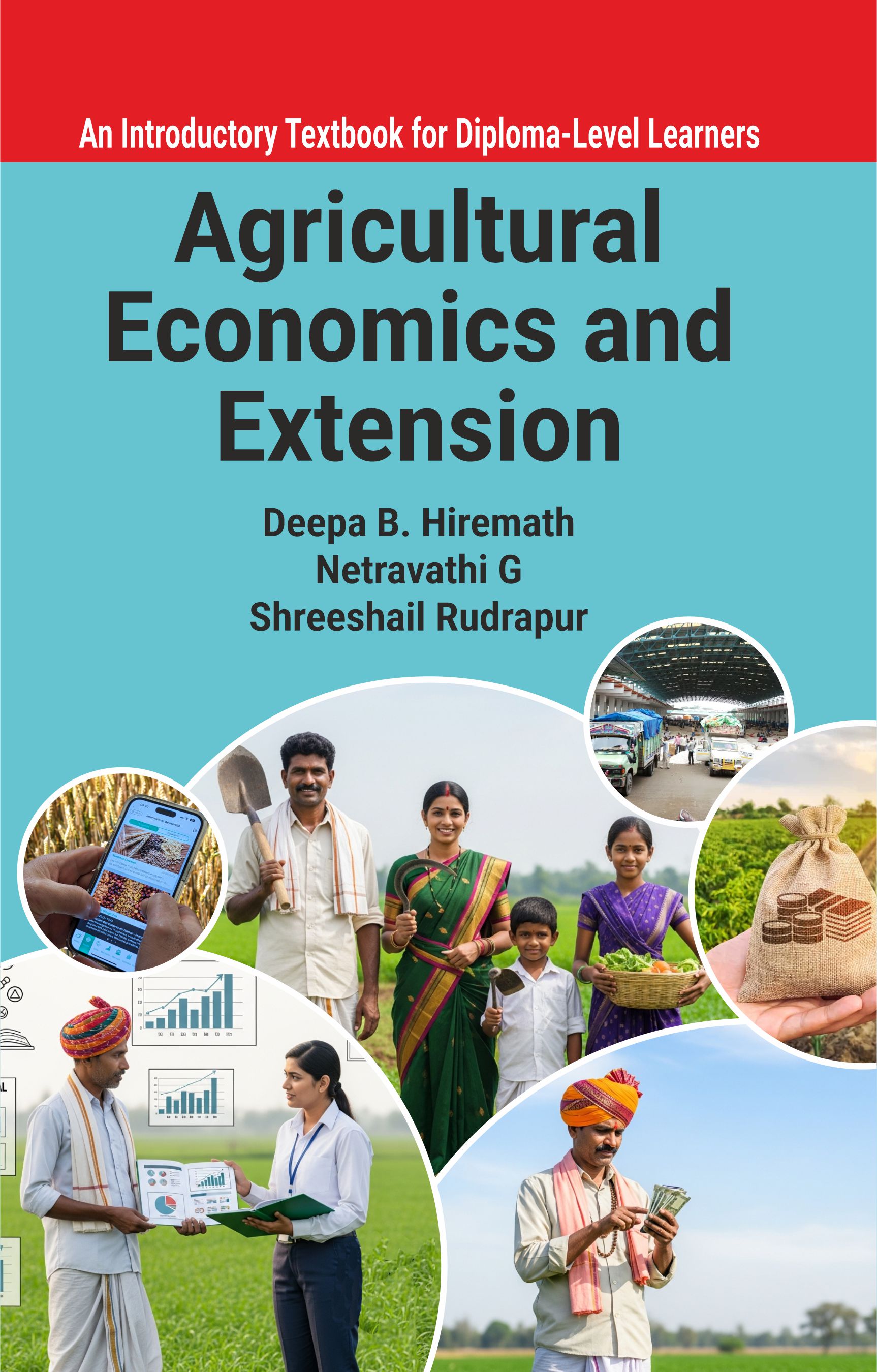
Dr. Deepa B. Hiremath , Dr. Netravathi G , Dr. Shreeshail Rudrapur
Availability :
Hard Bond
ISBN: 9789349317222
Publishing Year: 2026
Paper Back
ISBN: 9789349317772
Publishing Year: 2026

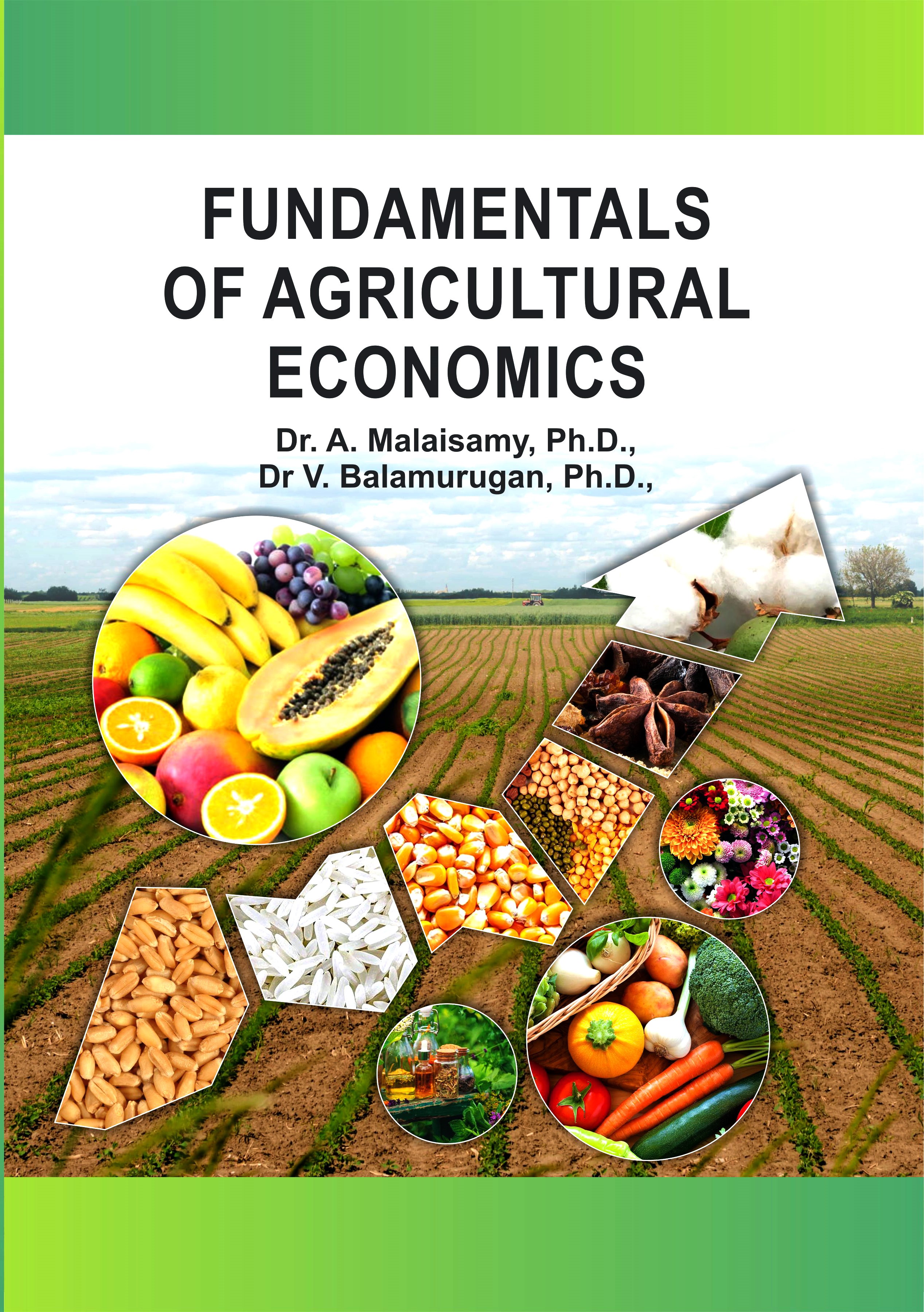
This textbook is designed to provide diploma students in agricultural polytechnics with a foundational understanding of two key disciplines in social sciences viz. Agricultural Economics and Agricultural Extension. It is divided into two parts, each offering structured, student-friendly content with practical relevance.
Part A: Agricultural Economics
Part A introduces students to the core principles of economics with a focus on their application in agriculture. Beginning with the definition, scope, and importance of economics, the chapters guide learners through essential concepts such as goods, services, utility, value, wealth, welfare and so on. The section builds progressively from understanding human wants and consumption theories to exploring demand, elasticity, and the behaviour of consumers in general. It also covers the building blocks of production i.e. land, labour, capital, and organization alongside the laws of returns and cost structures. The final chapters delve into market forms and classifications, equipping learners in understanding agricultural markets and pricing mechanisms. This part lays the groundwork for economic reasoning, decision-making, and policy understanding in the context of agriculture.
Part B: Agricultural Extension
It begins with the basics of extension education and its significant role in India’s agricultural development. Students will explore teaching methods, media and communication tools that empower rural communities through knowledge dissemination. The section emphasizes participatory approaches, effective communication, and the use of Information and Communication Technology (ICT) tailored for polytechnic learners. The final chapters highlight recent approaches and innovations in extension education, encouraging students to learn to think creatively and adapt to the changing needs of farmers and rural communities.
Together, these two parts provide a strong foundation by integrating economic analysis with extension strategies. The textbook intends to prepare students for higher studies besides careers in farm management, rural development, agricultural advisory services and others. Its content is structured to be clear, adaptable to local contexts, and focused on practical application, enabling learners to apply concepts effectively in field settings.
Dr. Deepa B. Hiremath

Dr. Deepa B. Hiremath is an accomplished academician and researcher in Agricultural Economics, currently serving as Assistant Professor at the College of Agriculture, Navsari Agricultural University, Bharuch Campus, Gujarat. Since her joining in the university, she has been actively involved in teaching, research, and extension activities across Diploma, Undergraduate, and Postgraduate programmes. With over 12 years of professional experience, Dr. Hiremath began her career as a Research Assistant at the prestigious Centre for Management in Agriculture, Indian Institute of Management– Ahmedabad. She earned her Ph.D. in Agricultural Economics from Navsari Agricultural University, and her academic journey has been distinguished by 14 Gold Medals, including the Vice- Chancellor and Chancellor Gold Medals during her undergraduate and postgraduate studies from Anand Agricultural University and Junagadh Agricultural University, respectively.
Her research interest spans a wide range of subjects, including agricultural marketing, production economics, food and agricultural policy, climate change, natural resource economics, and agricultural finance. She has authored 2 books and published over 45 research articles and book chapters in reputed national/ international journals and books
Table of Contents..
Part A: Agricultural Economics
1. ECONOMICS
2. AGRICULTURAL ECONOMICS
3. BASIC CONCEPTS
4. HUMAN WANTS
5. THEORY OF CONSUMPTION
6. DEMAND
7. FACTORS OF PRODUCTION
8. LAWS OF RETURNS
9. COST AND COST CURVES
10. MARKET AND MARKET FORMS
PART B: AGRICULTURAL EXTENSION
11. BASICS OF EXTENSION EDUCATION
12. NEED OF AGRICULTURAL EXTENSION IN INDIA
13. EXTENSION TEACHING METHODS
14. CLASSIFICATION OF TEACHING METHODS
15. MEDIA CONCEPT, NATURE AND SCOPE
16. COMMUNICATION: MEANING AND IMPORTANCE
17. NEW APPROACHES IN EXTENSION
18. ICT: INFORMATION COMMUNICATION TECHNOLOGY
19. GLOSSARY
20. REFERENCES